


-
Products
-
Engineering Case
-
News
-
About Us
Products
Engineering Case
News
About Us

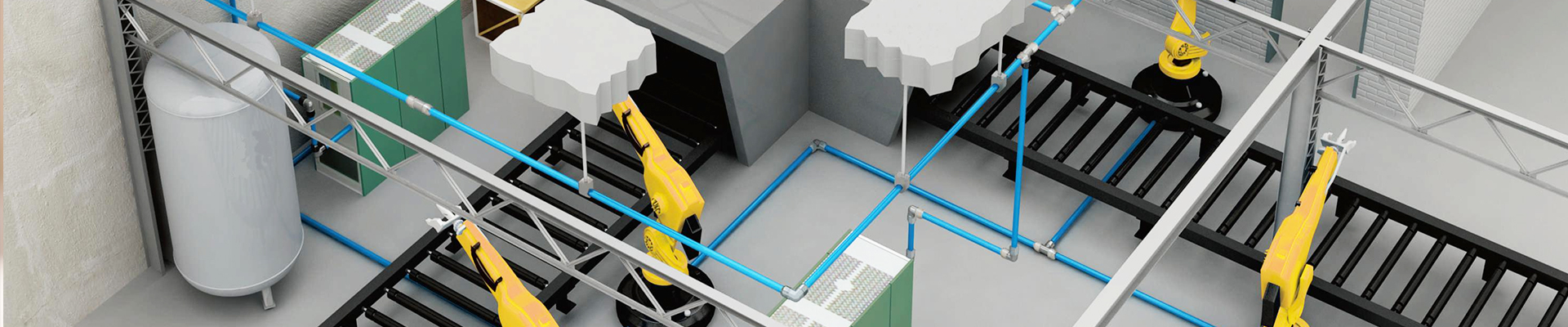
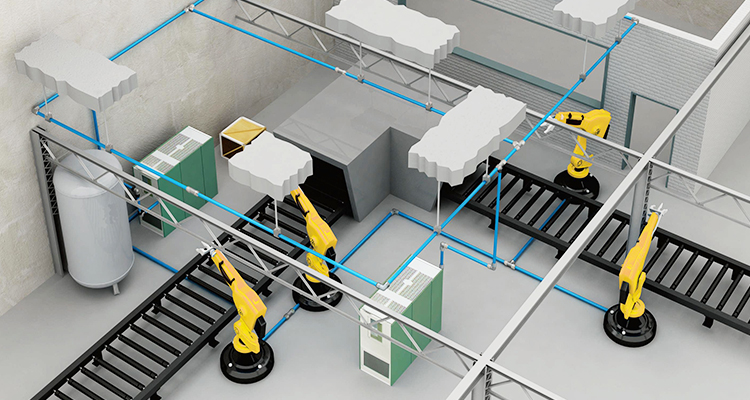
A semiconductor factory is a type of high-tech manufacturing industry that requires a complete compressed air system to supply various equipment and tools in order to ensure the normal operation of the production line. The construction plan for compressed air pipelines is the key to implementing this system. This article will provide a detailed construction plan for compressed air pipelines in semiconductor factories to ensure the safe, reliable, and efficient operation of the system.
1、 Preparation before construction
(1) Design proposal. Before construction, pipeline design and planning are required, including pipeline routing, layout, dimensions, materials, pipeline supports, etc. At the same time, it is also necessary to consider the pressure and flow requirements of the pipeline, as well as the accessories, valves, filters, etc. of the pipeline.
(2) Prepare materials. Prepare the required materials according to the design plan, including pipes, joints, flanges, brackets, valves, filters, etc. When selecting materials, it is necessary to consider their performance and purpose, such as selecting materials that can withstand high pressure and corrosion resistance for pipelines, and selecting materials that can stably support pipelines for supports.
(3) Security protection. Before construction, safety measures such as setting up safety belts and fixing brackets are required to ensure the safety of construction personnel.
(4) Qualification for acceptance. Before starting construction, it is necessary to train and assess the relevant construction personnel to ensure that they have the corresponding qualifications and skills.
2、 Construction steps
(1) Determine the direction of the pipeline. According to the design plan, determine the direction of the pipeline, including vertical and horizontal, to ensure a reasonable pipeline layout and good ventilation.
(2) Install pipeline supports. Install pipe supports according to the direction and size of the pipeline to ensure its stability and resistance to deformation. The installation position of the bracket should consider issues such as pipeline load, safety protection, and corrosion prevention.
(3) Install the pipeline. According to the design plan, install the pipelines in a certain order, including pipeline connections, flange installation, bracket fixation, etc. During the installation process, attention should be paid to the accuracy of pipeline positioning and dimensions to ensure that the pipeline is flat and not easily deformed.
(4) Install accessories and valves. According to the design plan, install accessories and valve fittings to ensure the normal operation of the pipeline system. When installing valves, attention should be paid to their installation position and adjustment range to prevent damage or leakage of pipelines due to excessive pressure or flow.
(5) Conduct pipeline testing. After the pipeline installation is completed, pressure testing and leakage testing are required to ensure the normal operation of the pipeline system. Before conducting testing, it is necessary to ensure that the piping system has been fully installed and that the accessories and valves have been properly installed. The pressure test needs to be conducted multiple times, with a certain amount of pressure added each time, while observing whether there are any abnormal conditions such as deformation or leakage in the pipeline.
(6) Perform anti-corrosion treatment. After the pipeline installation is completed, anti-corrosion treatment is required to protect the pipeline from corrosion and oxidation. Common anti-corrosion treatment methods include spraying, galvanizing, painting, etc.
(7) Write a pipeline installation report. After the pipeline installation is completed, a pipeline installation report needs to be written, including the installation location, specifications, materials, connection methods, test results, etc. of the pipeline. These pieces of information can assist in subsequent pipeline maintenance and management.
3、 Construction precautions
(1) Selection of materials. When installing pipelines, it is necessary to choose suitable materials based on the purpose and environment of the pipeline, such as pressure, temperature, corrosion, and other factors.
(2) Installation accuracy. When installing pipelines, it is necessary to ensure installation accuracy, quality, and normal operation of the pipelines.
(3) Security protection. When installing pipelines, it is necessary to set up corresponding safety protection measures, such as safety belts, warning signs, etc., to ensure the safety of construction personnel.
(4) Acceptance is qualified. During pipeline installation, it is necessary to inspect the pipeline to ensure that it meets the requirements and specifications.
4、 Summary
The development and implementation of the construction plan for compressed air pipelines in semiconductor factories are key to the pipeline system. Through the introduction of this article, we can understand the specific steps and precautions of the compressed air pipeline construction plan for semiconductor factories, providing guarantees for the safe, reliable, and efficient operation of the pipeline system. When implementing the pipeline construction plan, attention should be paid to material selection, installation accuracy, safety protection, and acceptance qualification to ensure the normal operation and long-term stability of the pipeline system.

 Scan to follow


